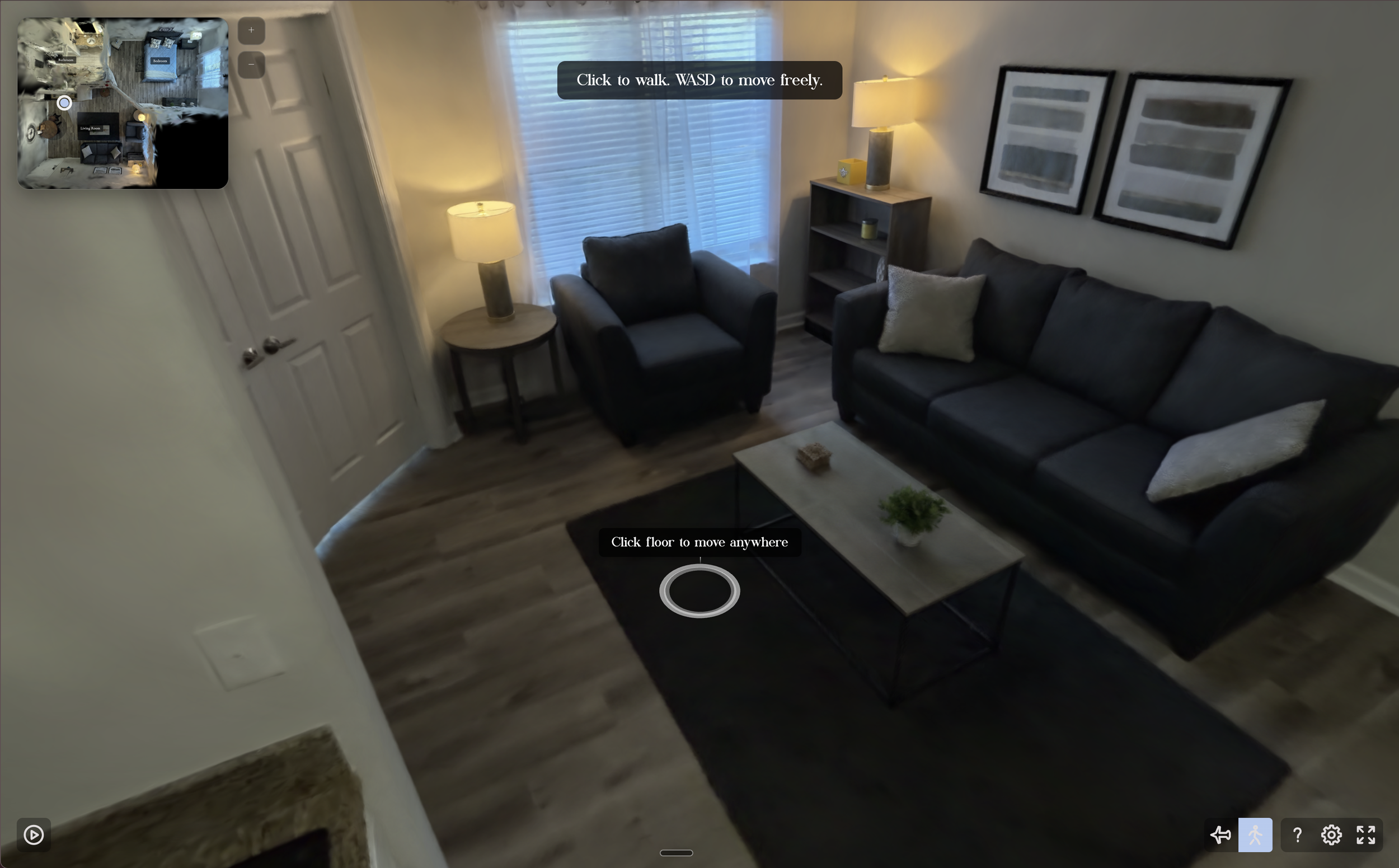
A product I made from scratch. With the use of 3D Gaussian splatting tech, users can move around anywhere in the virtual tour unlike anything seen before.
Splat Estate
3D virtual tours reimagined

The problem
It started with my apartment complex's leasing office worker, overworked every single day. There was always a backlog — emails, maintenance requests, the usual grind of running an apartment complex with one person. Every time I stopped by with a question about my unit, I'd wait at least 20 minutes while she handled someone else's complaint.
What really caught my attention was the protocol on top of all that: no matter what she was doing, if someone walked in requesting a tour, she had to drop everything and take them through the property in person. Already buried in work, and this was non-negotiable.
I wanted to help, so I asked her why the complex hadn't set up a virtual tour system like its competitors. Her answer stuck with me: "The virtual tour just doesn't bring about the same feeling as seeing it in person. Users can only move to certain spaces, and it feels limited." That made total sense — no property manager wants to risk losing a lead to a flat, restrictive tour. And even if they wanted better, the standard process — finding a photographer, renting a 360° camera rig, waiting on turnaround — is tedious enough that most complexes just don't bother.
I wanted to build something they could actually rely on to show off their apartments. I was already experimenting with Gaussian Splatting at the time, and it hit me: what if I captured the apartment and turned it into a fully walkable tour? That question became Splat Estate.
The Solution
Product walkthrough (demo)
Technical deep-dive
1. navigation
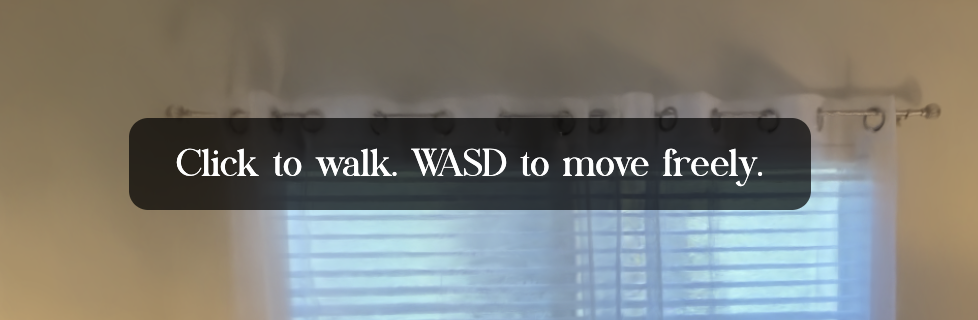
The user can walk anywhere.
Most 3D tours lock you into fixed viewpoints or a handful of pre-set positions. This one doesn't — the entire captured space is walkable, in any direction, at any pace.
That's possible because every room has its own collision boundary, generated directly from the 3D scan itself. A seed point is placed at standing height and flood-filled outward through the actual open space of the room, so the walkable area matches the real geometry of the property — not an approximation of it.
Multiple ways to move, for different users:
WASD — keyboard movement for desktop users
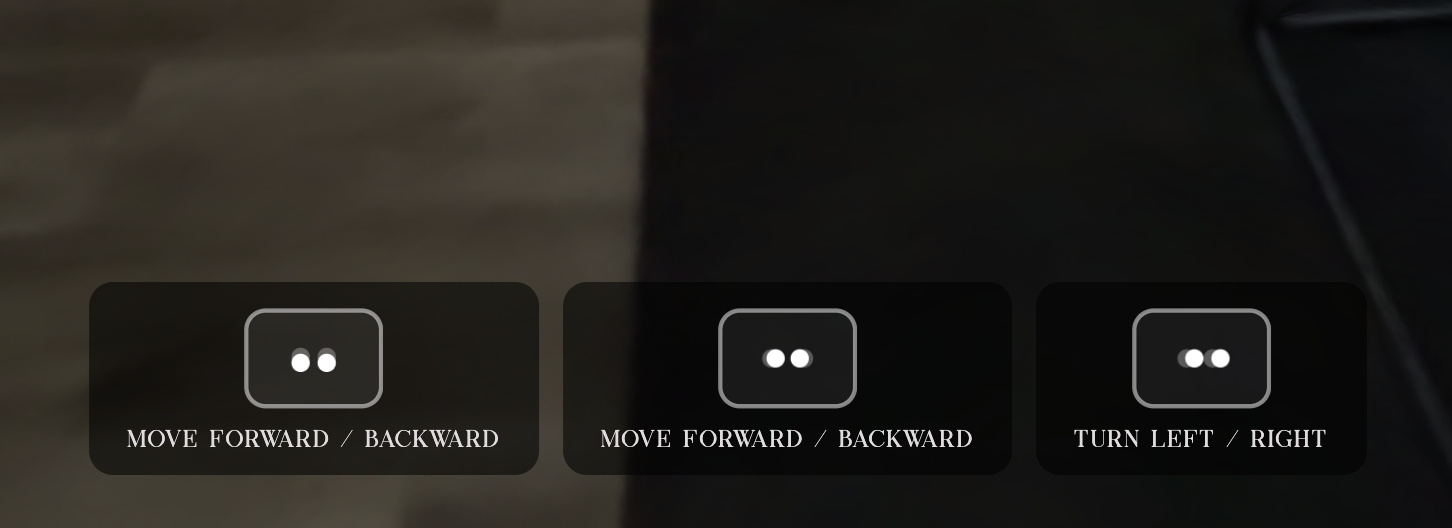
Scroll & pinch — zoom and orbit for quick browsing
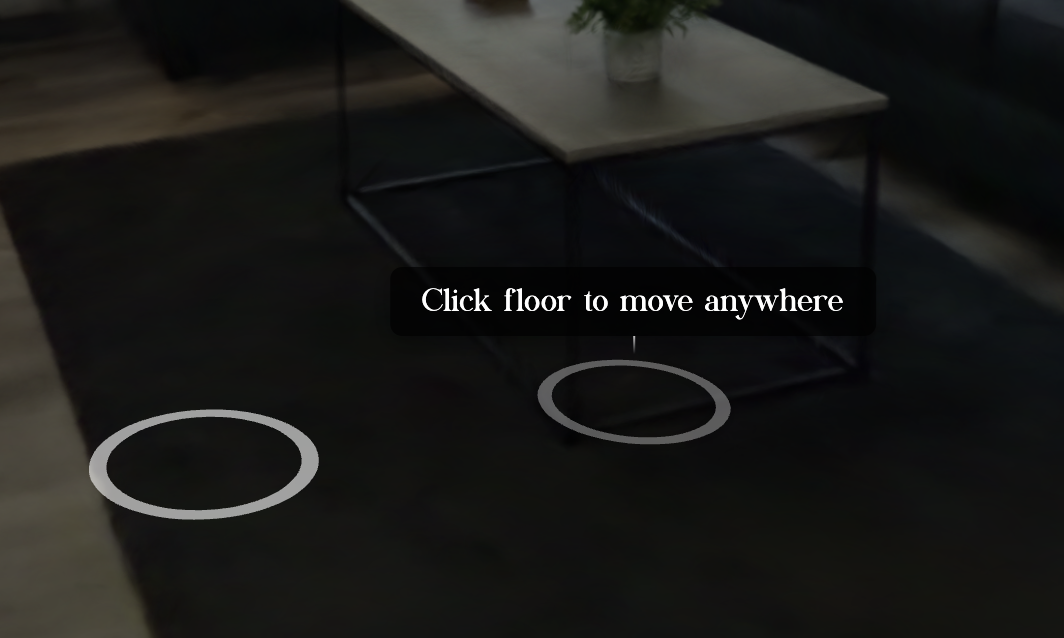
Tap-to-walk — tap anywhere on the floor or in the room, and the camera walks there automatically — built for mobile, where WASD doesn't exist
Portal System.
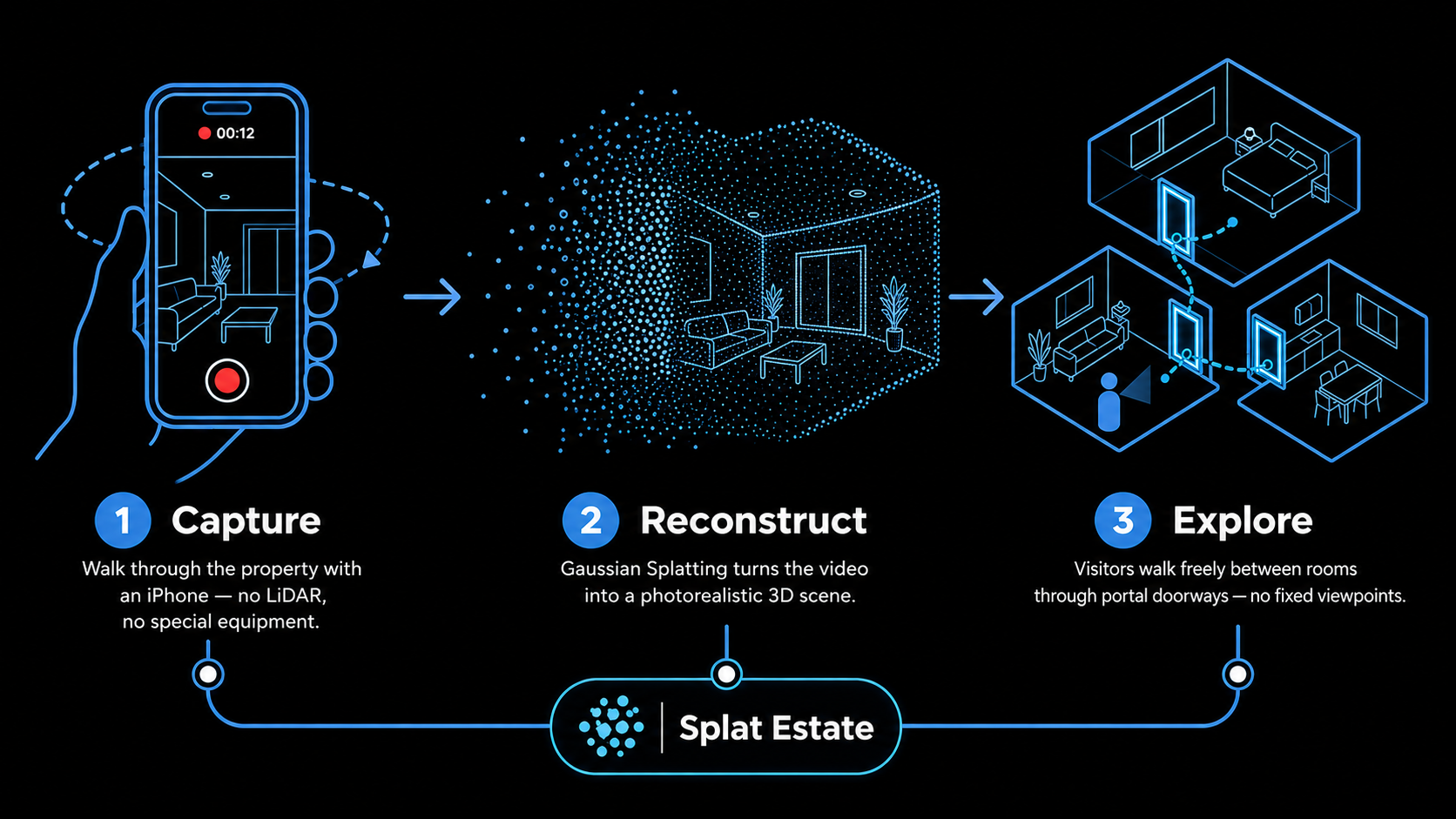
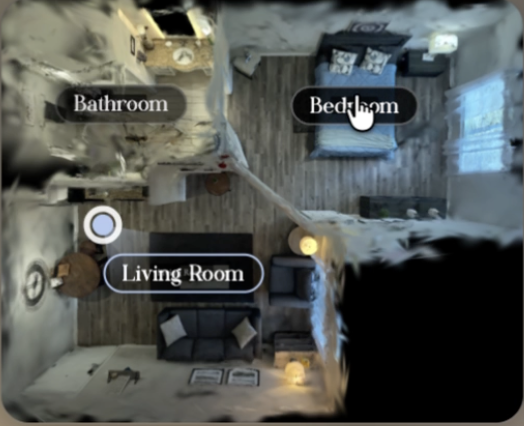
Rather than reconstructing an entire property as one giant, continuous 3D model — which causes visual artifacts and blending errors where rooms meet — each room is captured and rendered as its own independent scene. Rooms are connected by portals: interactive markers placed on doorways that instantly transport the user to the next room's scene when clicked.
Because each room loads as a separate, lightweight file rather than one massive combined model, transitions between rooms happen with almost no buffer time — even on a phone, even on cellular data.
Splat Estates - Can walk anywhere
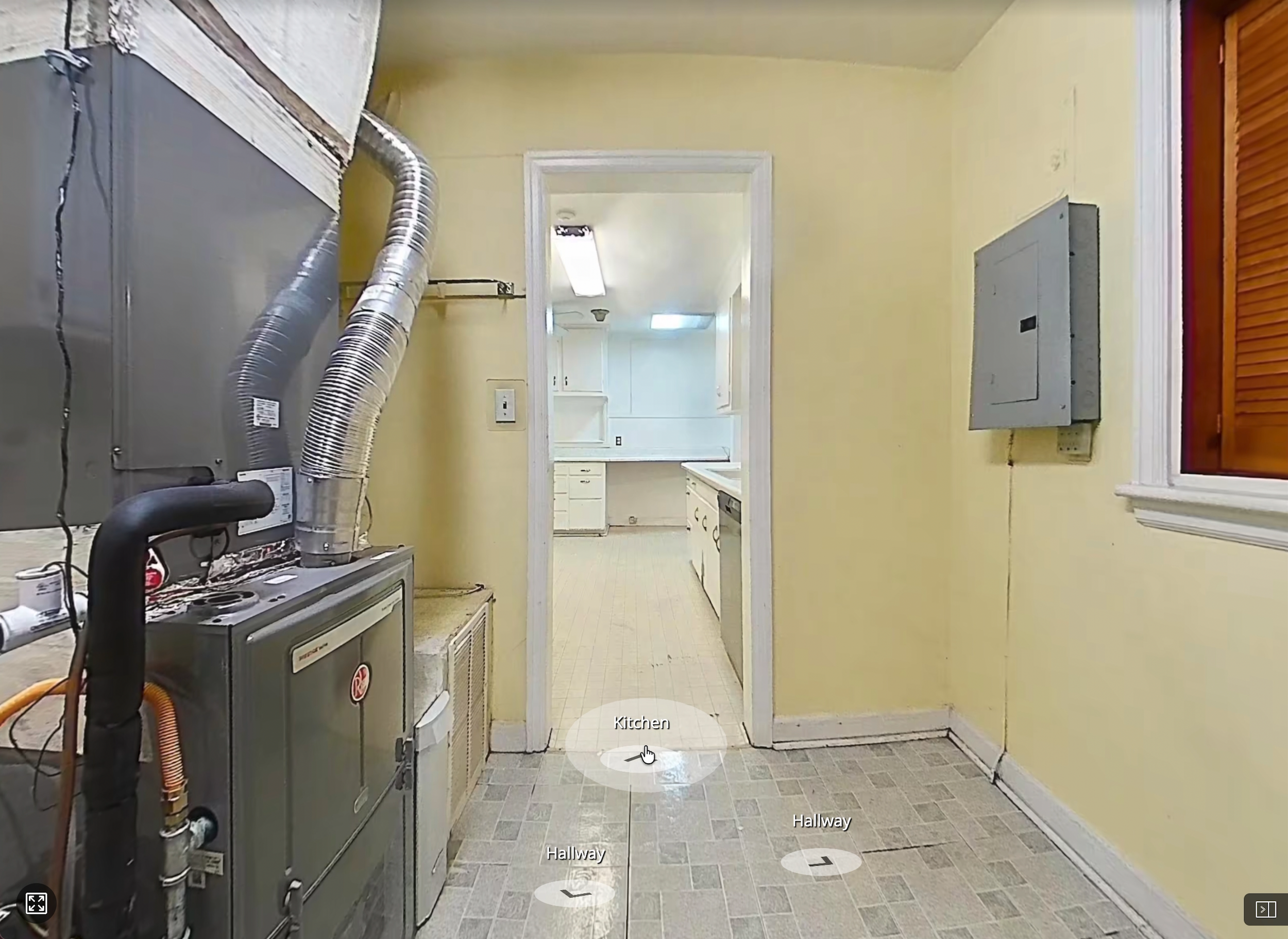
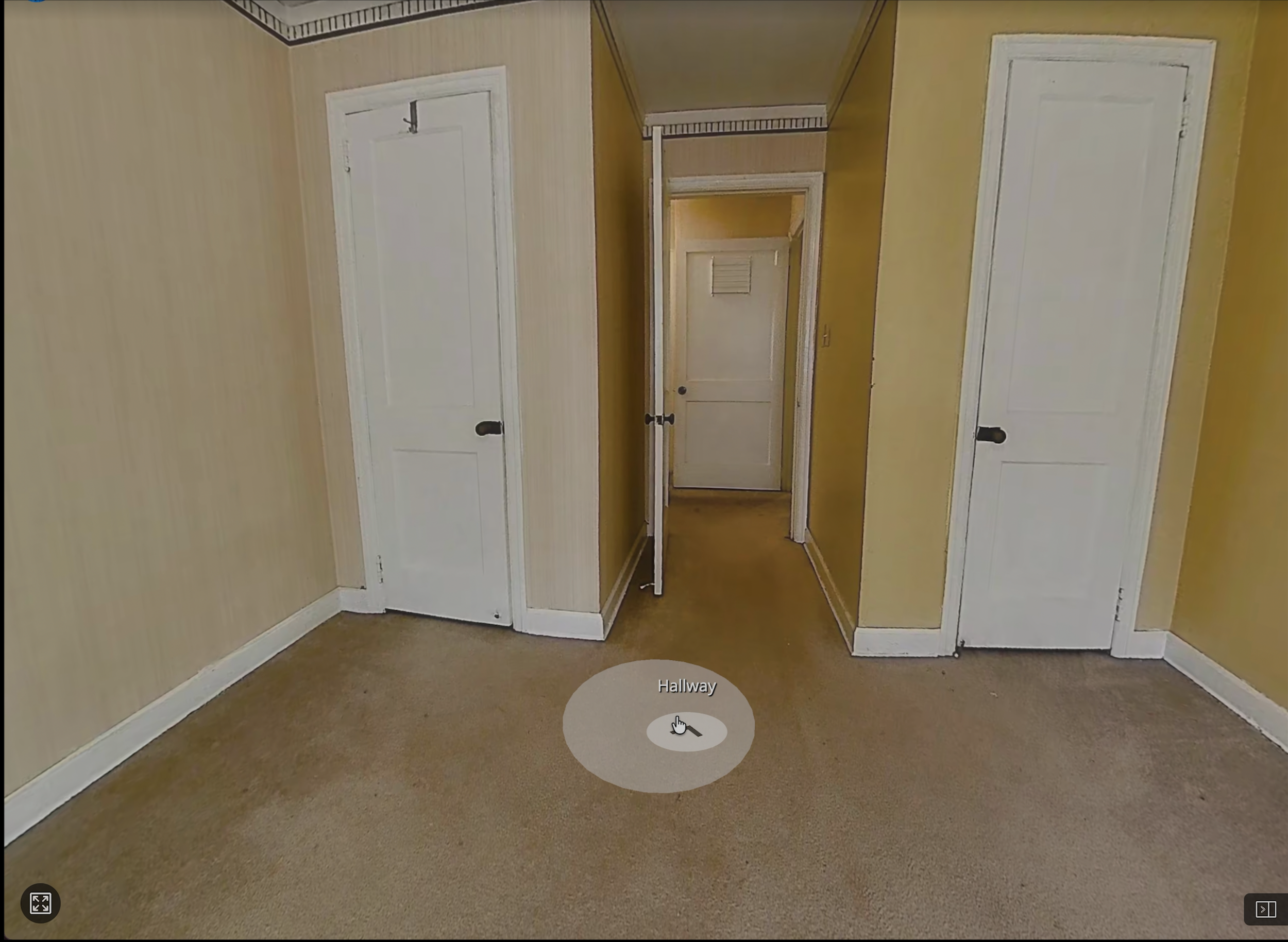
Traditional 3D tours (below)
360 degree camera - Only the center of the rooms
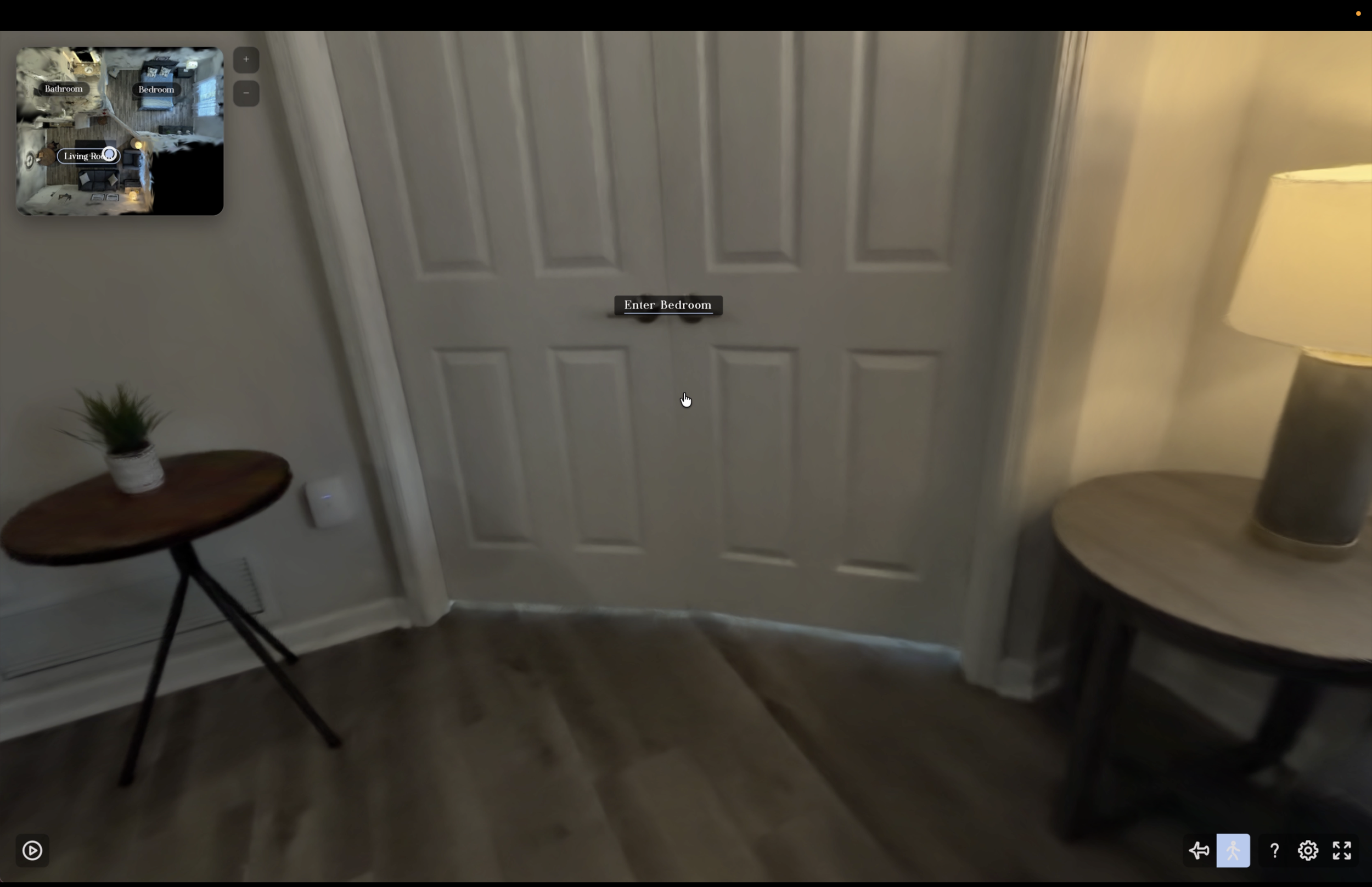
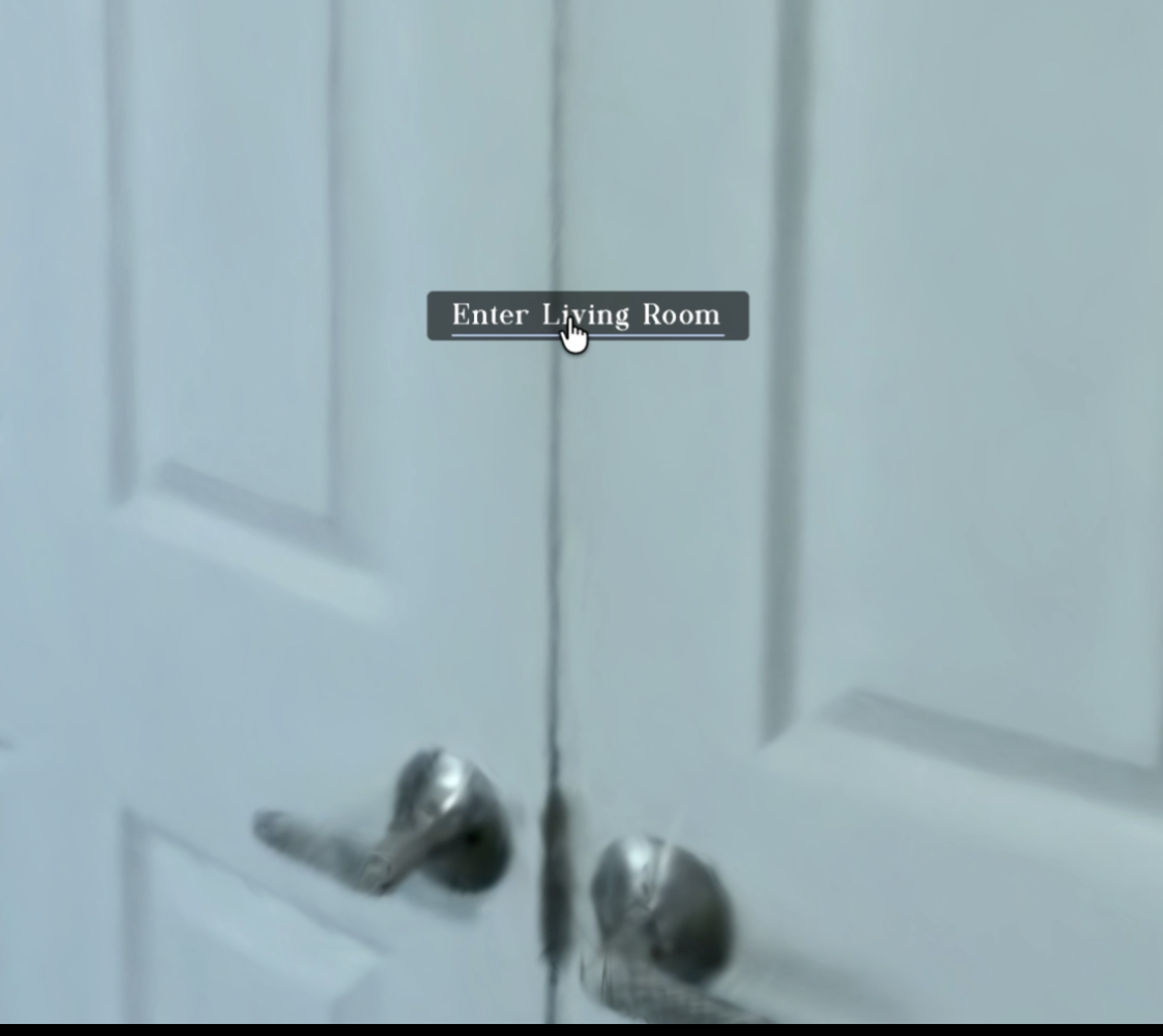
Splat Estate replaces the traditional 360° camera rig with something every leasing agent and photographer already carries: an iPhone. We walk through a property recording standard video, and Gaussian Splatting reconstructs it into a fully navigable 3D environment — no LiDAR hardware, no specialized equipment, no multi-thousand-dollar scanner.
Instead of stitching every room into one fragile 3D model, each room is captured and reconstructed as its own independent scene, connected by portals — clickable doorways that carry a visitor from room to room just like walking through the real property. This means visitors aren't locked into fixed viewpoints the way they are with panorama-based tours; they can walk freely through the space, look around naturally, and actually get a feel for how the rooms connect — the exact limitation my leasing office worker described.
The result is a tour that's cheaper and faster to produce than the standard process, permanently hosted with the client owning the files (no recurring subscription lock-in), and — because one capture of a floor plan can be reused across every identical unit in a complex — a single shoot can cover hundreds of units instead of just one. It's the tour a leasing office can actually rely on, without adding to anyone's workload.