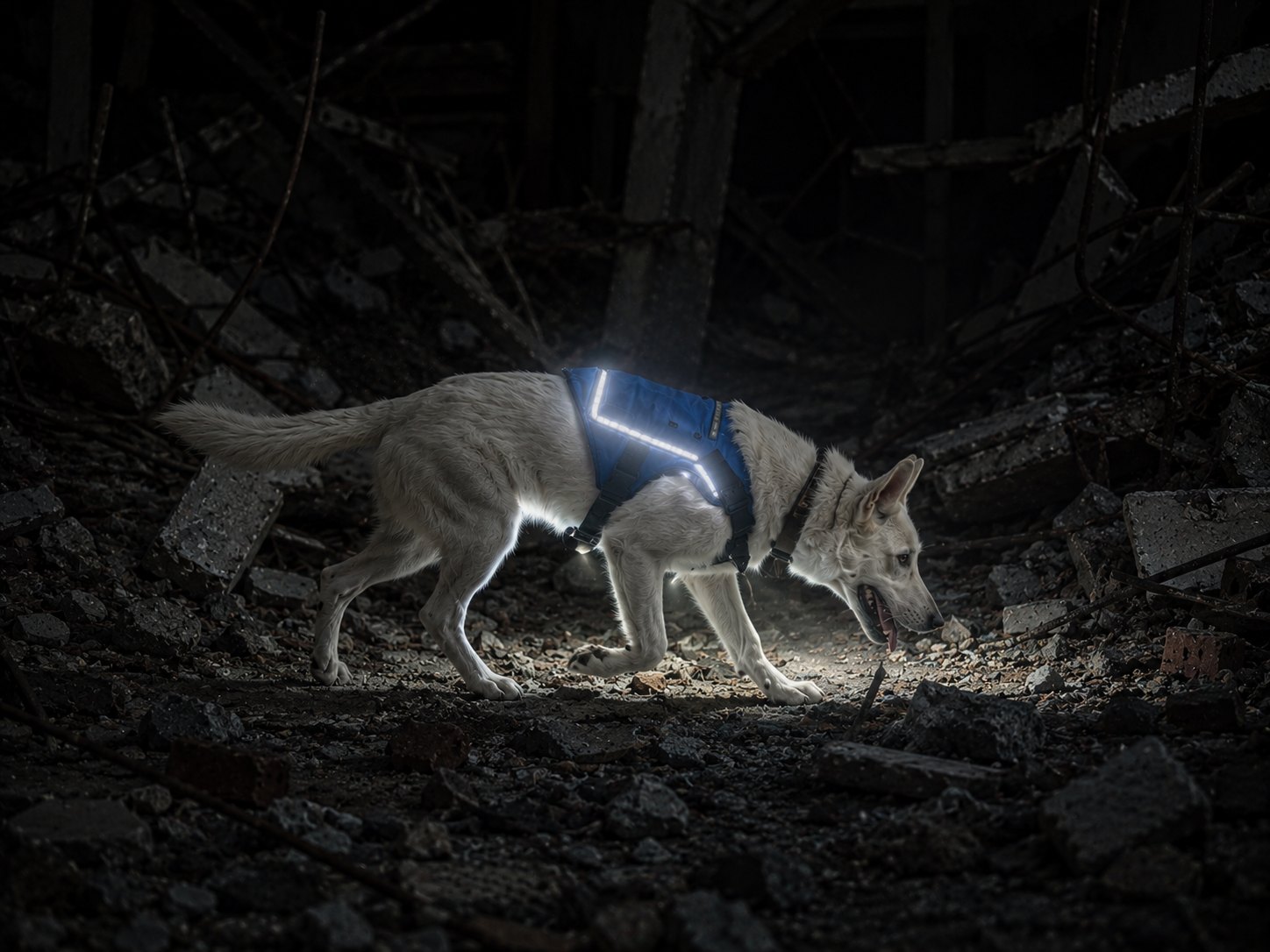
A wearable, sensor infused, data capture vest for search and rescue dogs that records multi-modal environmental data inside disaster rubble, enabling the generation of photorealistic simulation environments for training autonomous rescue robots.
Terrain eye
robot training data collection & application

vision & background
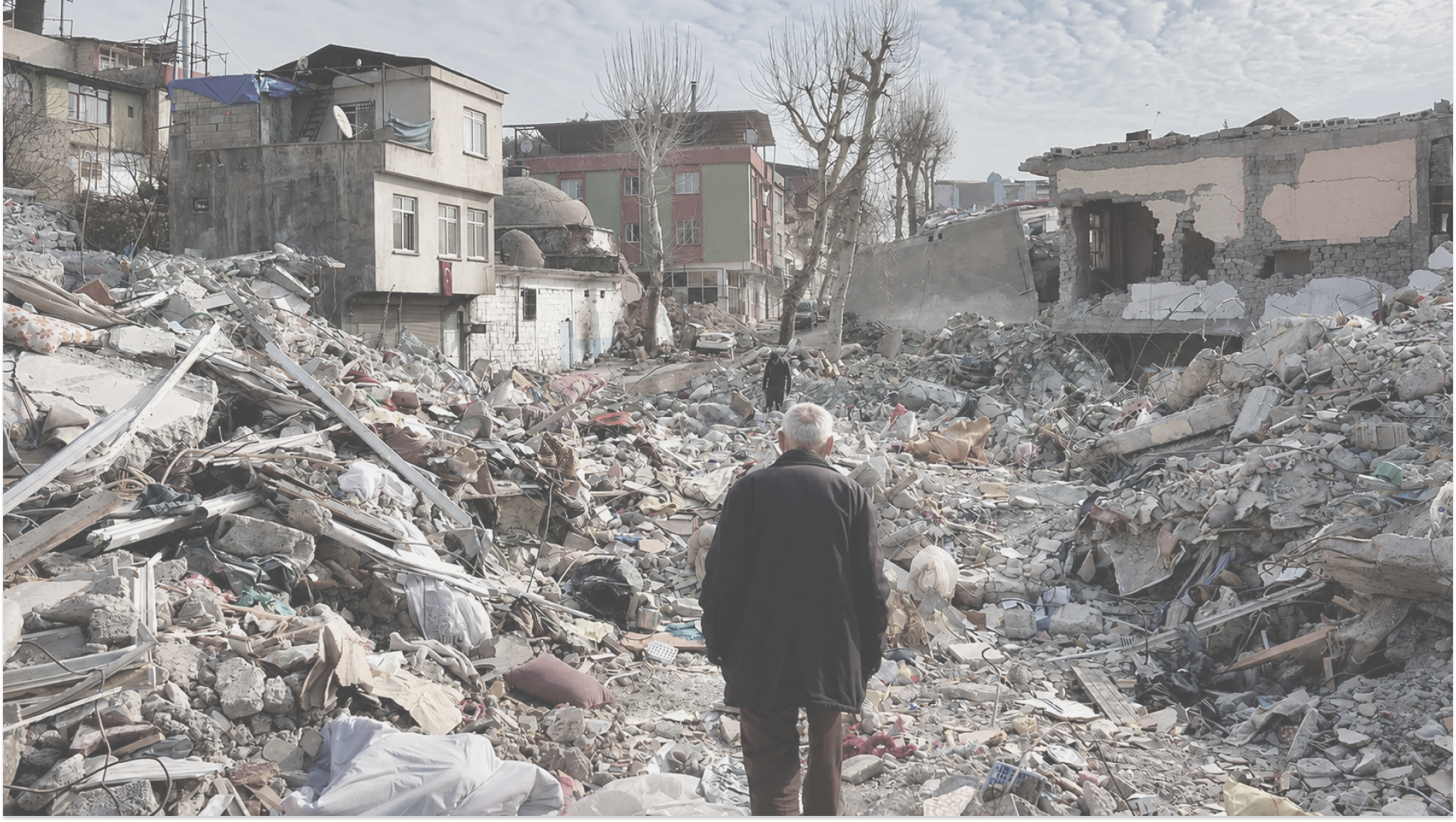
When an earthquake collapses a building, the survival clock starts. Trapped victims have roughly 72 hours. International rescue teams take 48 to arrive.
Search dogs go where humans can't — navigating void spaces beneath tons of rubble faster and more reliably than any machine currently deployed. The next frontier is autonomous SAR robots that can do the same.
The problem: every simulation environment used to train them is procedurally generated. Clean geometry, flat floors, perfect lighting. Nothing like real collapse. A robot that achieves 95% success in simulation may achieve only 30–60% on the same real-world task.
TerrainEye closes that gap — capturing the data that no sensor, drone, or robot has ever collected, from inside real rubble, in real time.
the vest
reconstruction pipeline
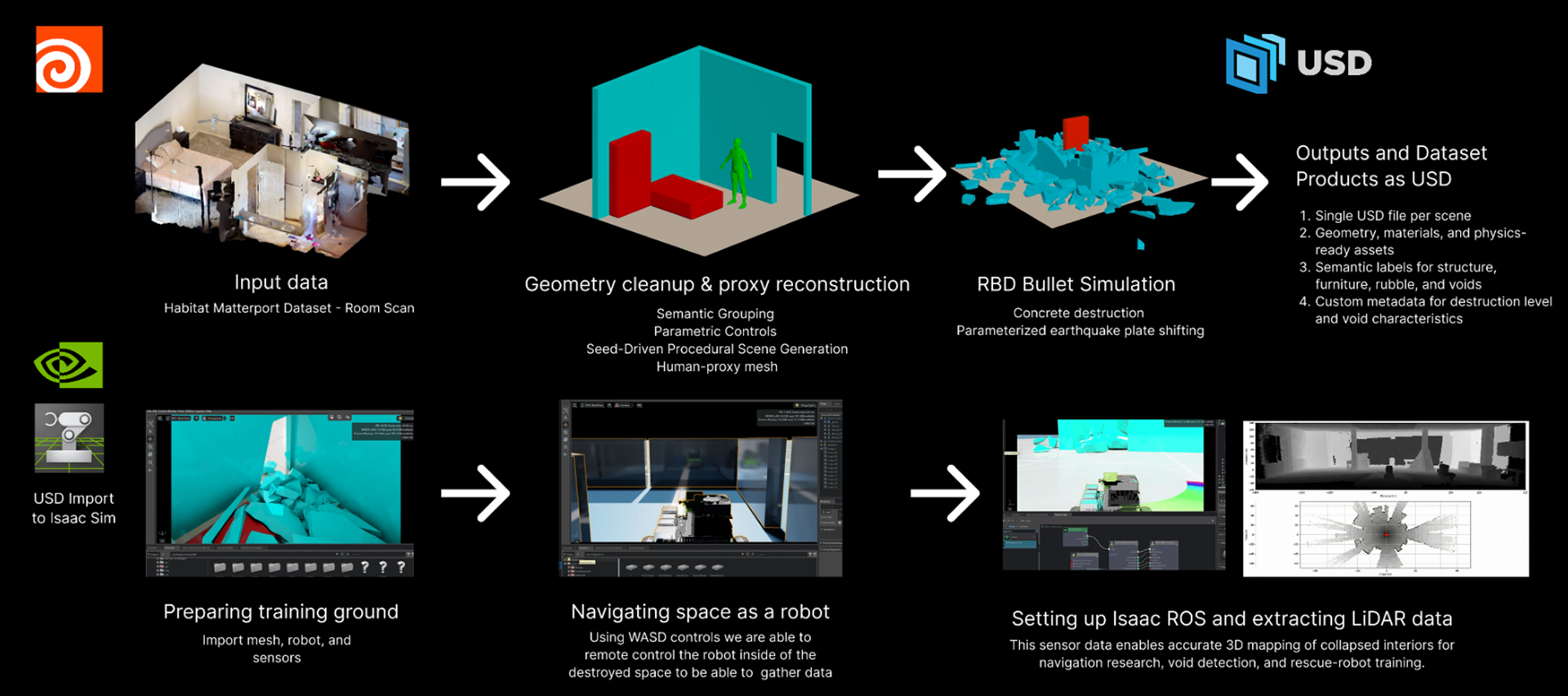
1. Video + Data
Raw footage from the vest feeds into a sharpness-filtered frame selection process, then into Depth Anything 3 — which predicts depth, camera extrinsics, and 3D Gaussians in a single forward pass.
2. Data Processing
Sharpness filtered frames feed into a modified version of Depth Anything 3, predicting depth, camera position, and 3D Gaussians. IMU data is calculated and used to increase accuracy.
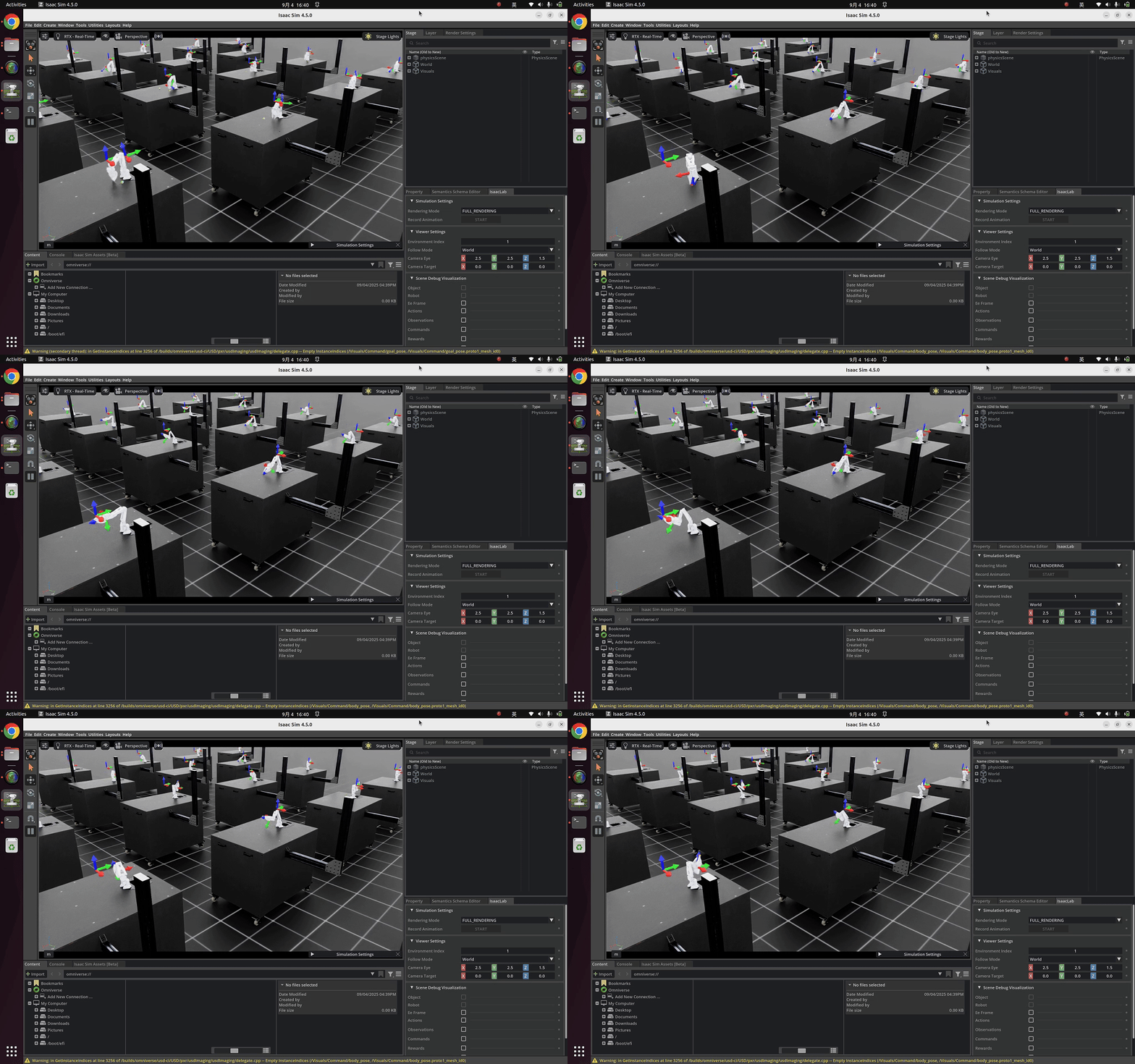
4. Robot Training
A photorealistic, geometry-true 3D reconstruction of a real collapsed building void. The kind of environment no human has mapped and no procedural generator can faithfully invent.
data quality progression
First Iterations
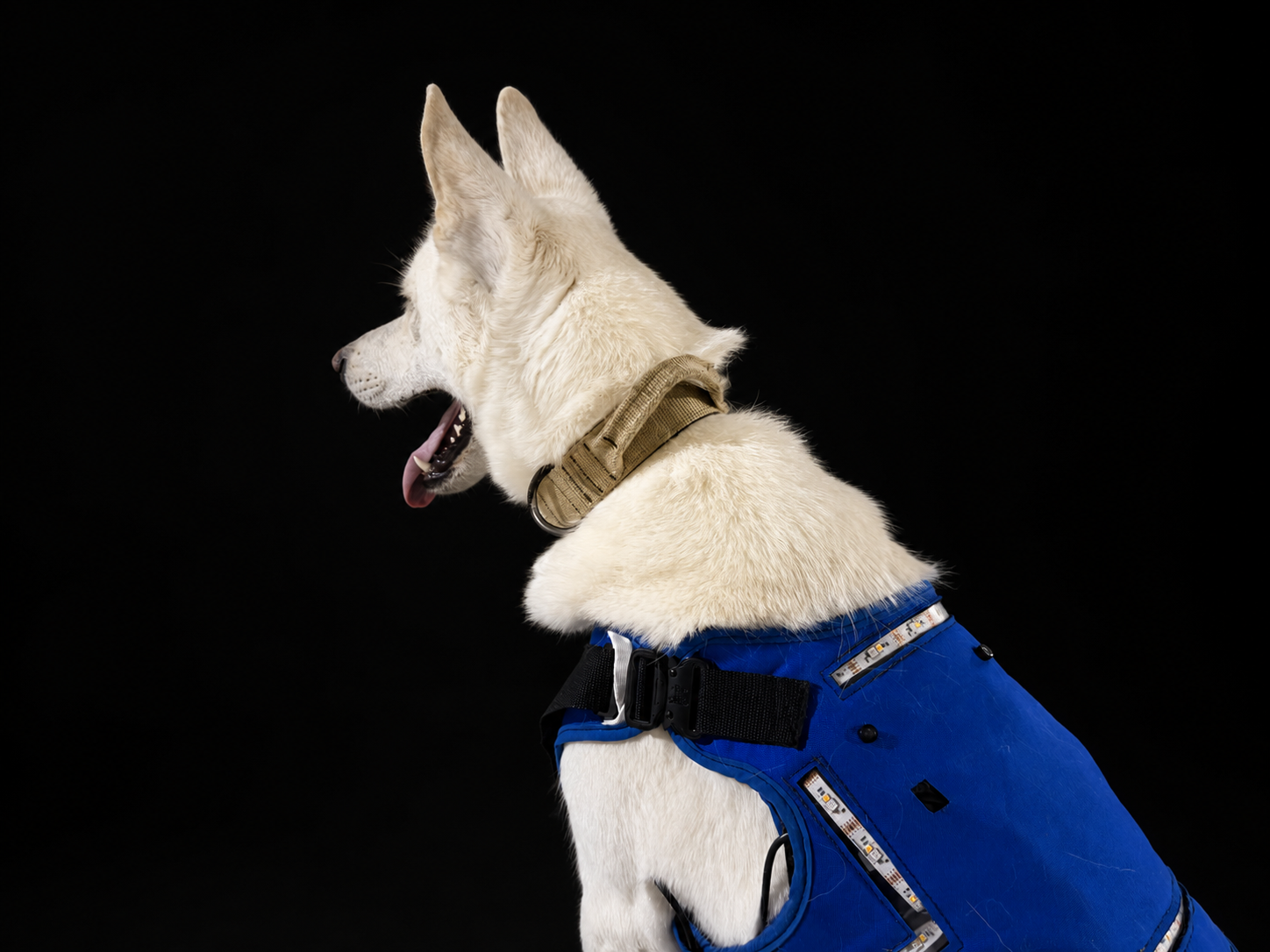
TerrainEye is built around one constraint: the dog has to forget it's wearing it.
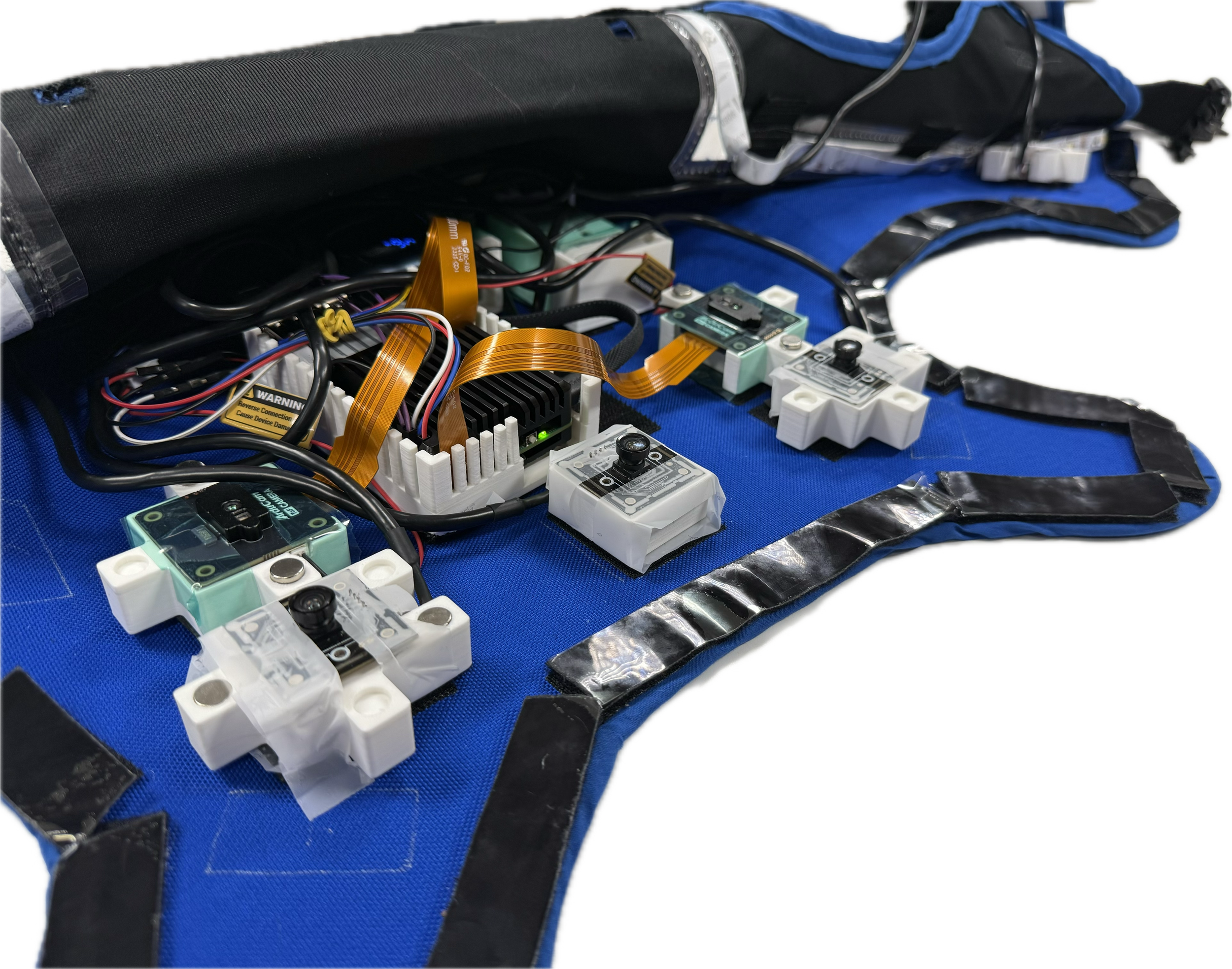
Every component is flush-mounted — nothing over the spine or shoulders, weight distributed evenly across the ribcage. The ballistic nylon shell is cut-resistant and structured to hold its shape under compression. Air mesh lining keeps the dog cool. An LED array ensures usable footage in darkness and signals survivors that help has arrived.
The vest captures three independent data streams simultaneously — RGB video, depth, and motion. Every data point is cross-referenced by at least two sensors, so the pipeline has something to anchor on even when individual readings degrade.
This is the only vest built with a no-snag profile as a core requirement.
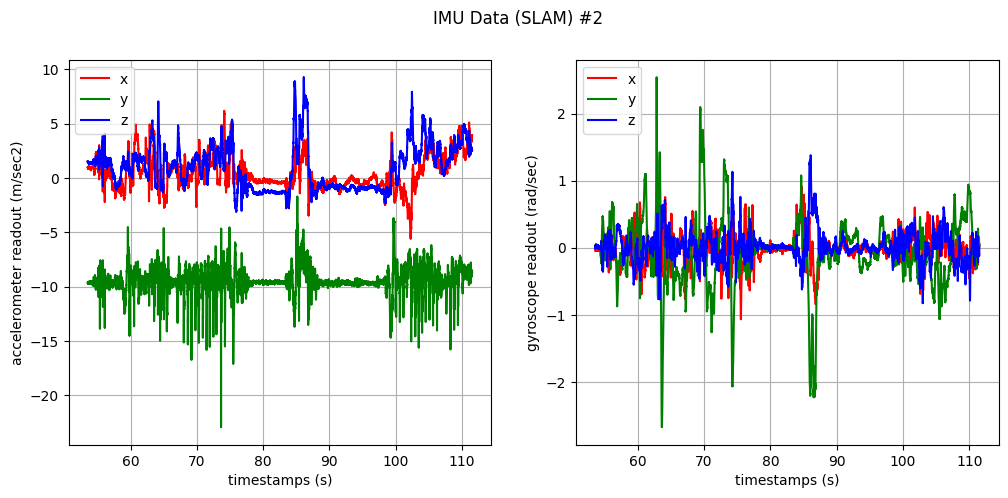
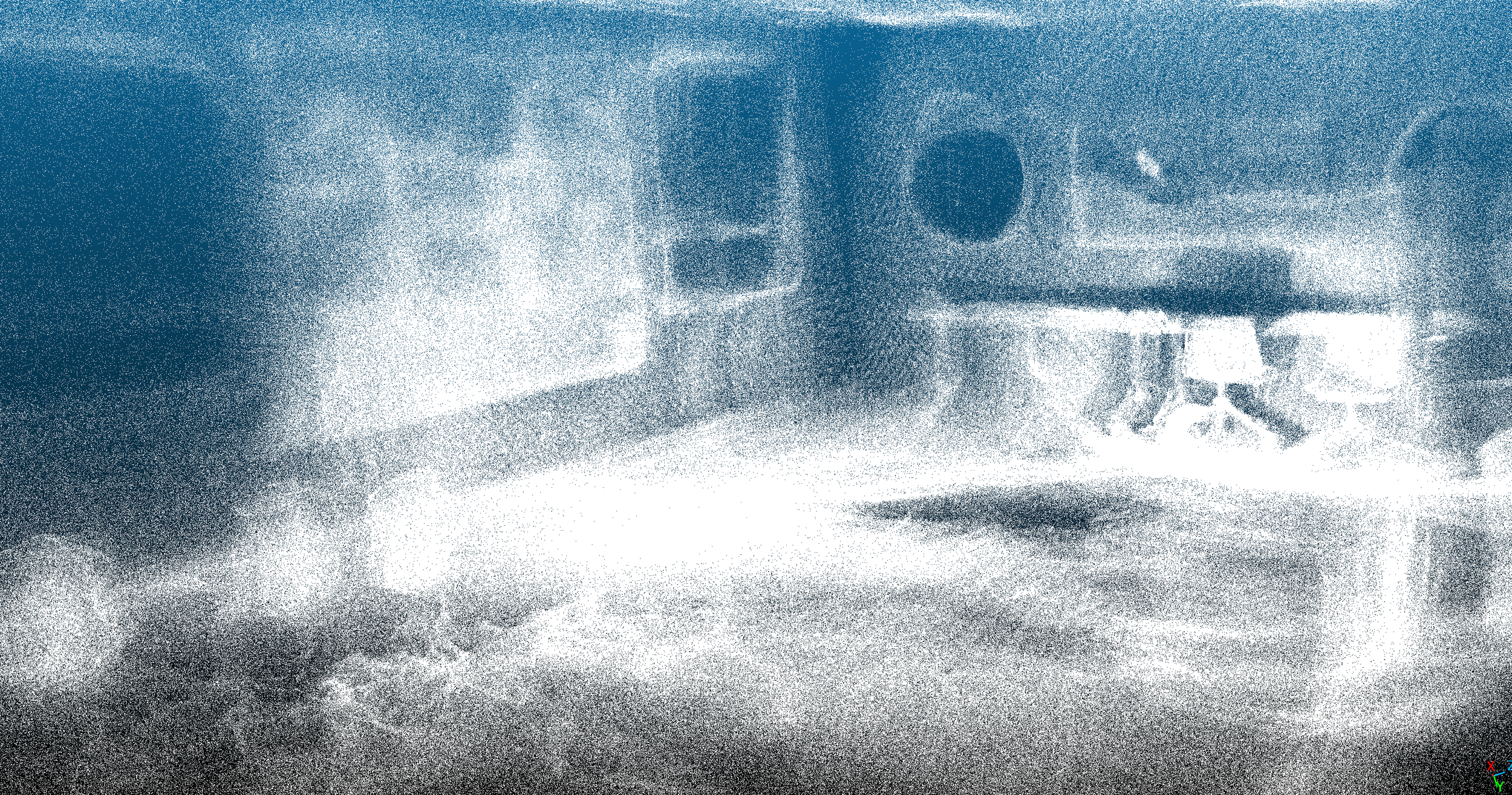
The improvement in data above is a result of the combination of improving sensors used in the vest and the methods and code used to extract the data, process it and display it.
Terrain Eye was fully researched and developed by the team below. All Rights reserved.
Nishad Nalawade, Tiffany Tawil, Lars Langenbach, Anushhka Thakur
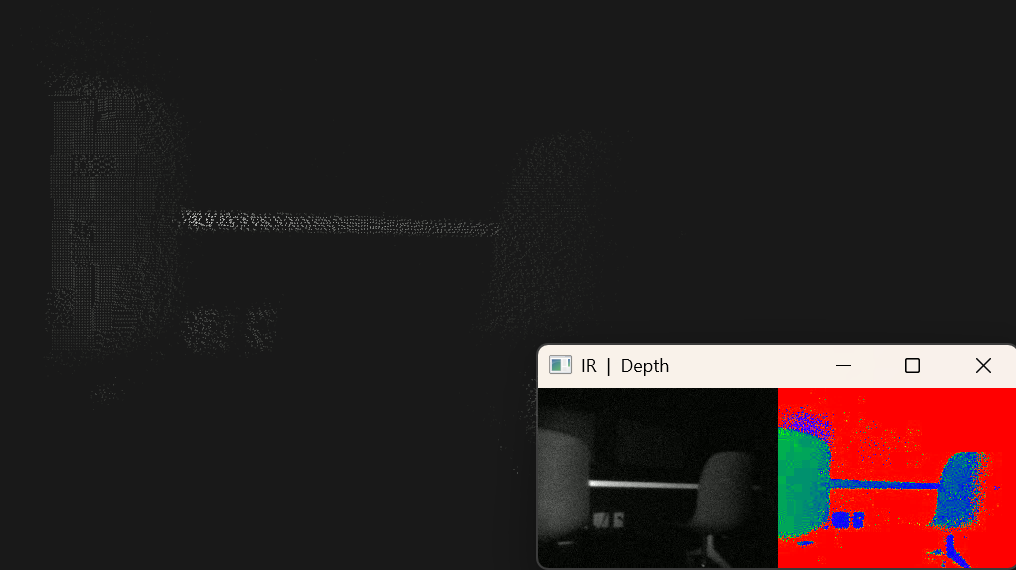
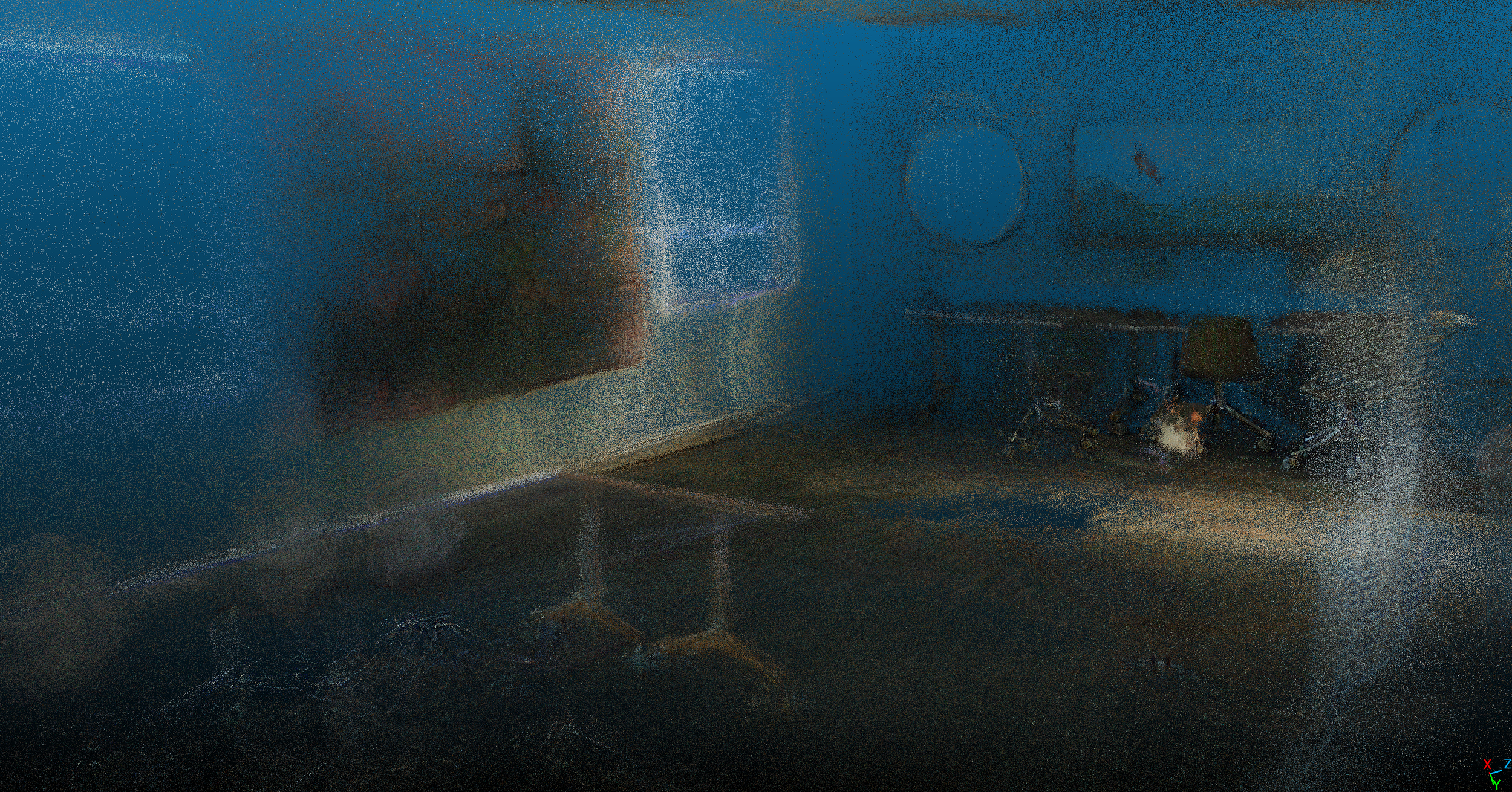
Improvement in Quality
3DGS environment from the dog running in the garage above!
3. Valuable Environment
A photorealistic, geometry-true 3D reconstruction of a real collapsed building void. The kind of environment no human has mapped and no procedural generator can faithfully invent.
Best 3DGS Quality so far!